


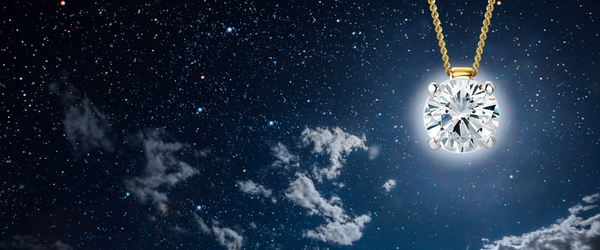
Monday, the first day of the modern week. A day that is either revered or loved. The name originated from the Old English word "Monandæg," which means "Moon's day," the practice derived from the ancient Roman practice of naming each day of the week after a celestial body.
It has widely been believed that the moon has effects on our tides, our weather, and humans emotions - therefore there have been many civilisations that have worshiped the moon and its associations with femininity and fertility.
Strangely enough Monday was initially the second day of the week since Babylonian times. The Babylonians were the ones who decided on a seven-day week, and they named five of the days for planets, and one each for the sun and for the moon. The first day was to worship the Sun and the second day was for the moon, after the 5 ruling planets followed.
|
|
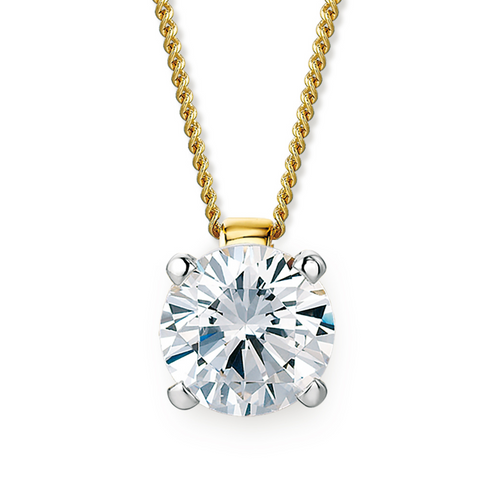
If you have someone in your life that loves the full moon, the most subtle everyday wear jewellery piece you could get is a Tru-Diamonds™ 3 ct. Raindrop Pendant. It is the perfect size for an impressive moon representation that anyone would be proud to have by their heart. The 3 ct. round brilliant cut Tru-Diamonds™ solitaire pendant with an 18 inch chain can be worn to any occasion, transforming perfectly from day to night. |
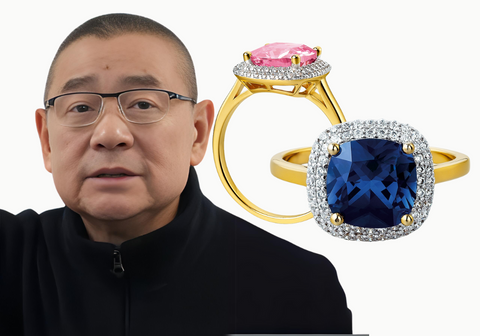
In November 2015, Joseph Lau a Hong Kong billionaire property tycoon bought two spectacular diamonds for his 7-year old daughter, Josephine. He paid $28,5-million for the rare 16.08 carat, cushion cut Pink Diamond at Christie’s Fine Jewels Auction and, the next day, won the 12.03 carat Blue Diamond with a record bid of $48.4-million at Sotheby’s.
He promptly named the gems “The Pink Josephine” and “The Blue Moon of Josephine”. The Blue Moon of Josephine Ring features 5.68ct. Blue Tru-Diamonds™ Cushion-cut centre stone surrounded by ice white Tru-Diamonds™ totalling 6.28ct.
A ‘Blue Moon’ refers to the second full moon within a single calendar month. The moon phases actually take 29.5 days to complete which means it takes just 354 days to complete 12 lunar cycles. So every 2.5 years or so a 13th full moon is observed within a calendar year.


